Sunnah and science, side by side
The Prophet ﷺ taught the use of the miswak centuries before microbiology existed. Below, his words meet modern findings.
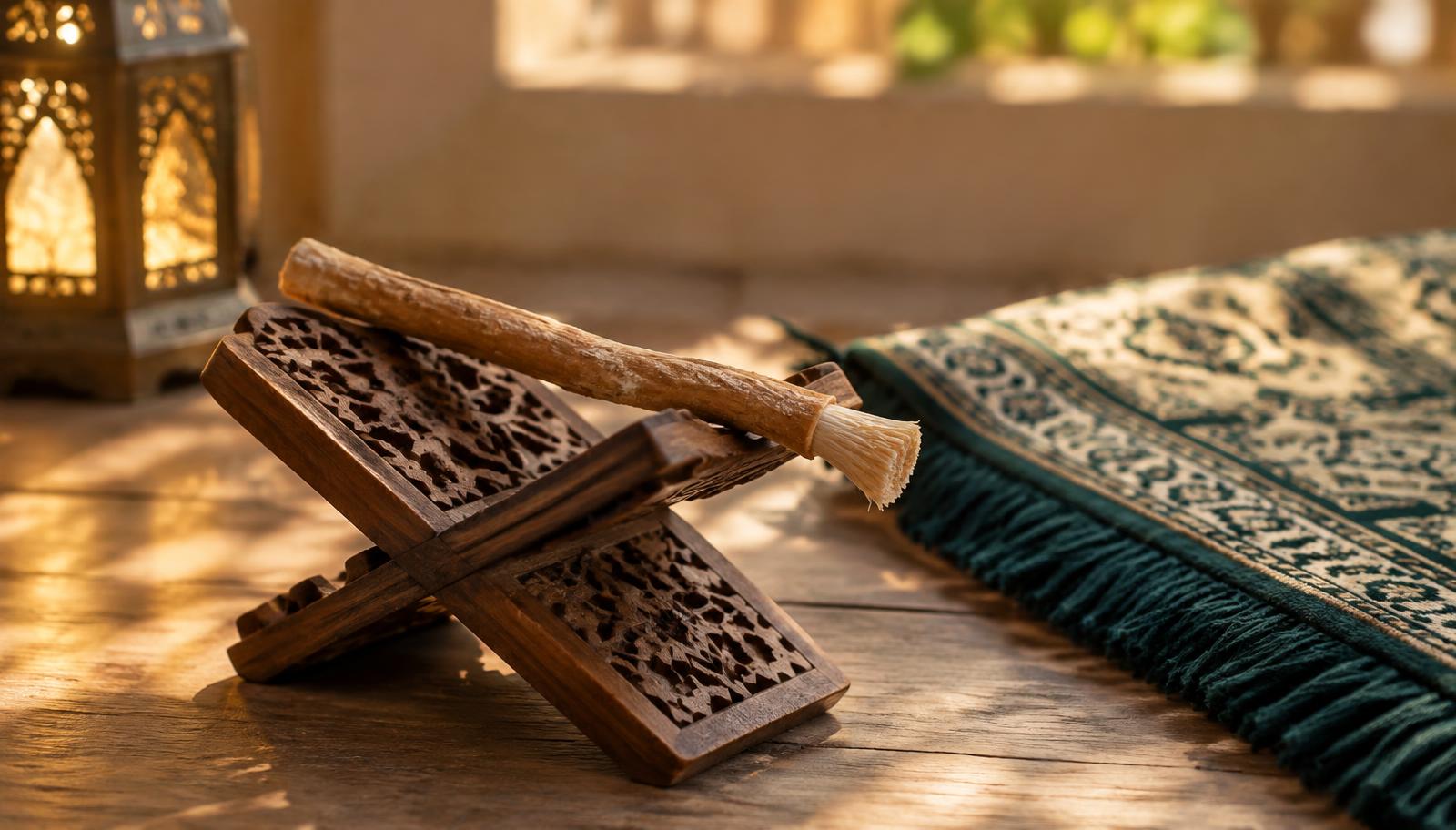
“The siwak purifies the mouth and pleases the Lord.”
«السِّوَاكُ مَطْهَرَةٌ لِلْفَمِ، مَرْضَاةٌ لِلرَّبِّ»
Sunan an-Nasa'i 5; Sahih al-Bukhari (ta'liq)
Modern finding
Studies confirm miswak's antibacterial action, lowering the bacteria behind decay, gum disease and bad breath.
“Were it not that I would burden my ummah, I would have ordered them to use the siwak before every prayer.”
«لَوْلَا أَنْ أَشُقَّ عَلَى أُمَّتِي لَأَمَرْتُهُمْ بِالسِّوَاكِ عِنْدَ كُلِّ صَلَاةٍ»
Sahih al-Bukhari 887; Sahih Muslim 252
Modern finding
Frequent cleaning several times a day disrupts plaque before it matures — exactly what dentists recommend today.
When the Prophet ﷺ got up at night, he would clean his mouth with the siwak.
كَانَ النَّبِيُّ ﷺ إِذَا قَامَ مِنَ اللَّيْلِ يَشُوصُ فَاهُ بِالسِّوَاكِ
Sahih al-Bukhari 245; Sahih Muslim 255
Modern finding
Saliva drops during sleep, letting bacteria multiply. Cleaning on waking removes this overnight build-up and morning breath.
Aishah was asked what the Prophet ﷺ did first on entering his home. She said: “The siwak.”
سُئِلَتْ عَائِشَةُ: بِأَيِّ شَيْءٍ كَانَ يَبْدَأُ النَّبِيُّ ﷺ إِذَا دَخَلَ بَيْتَهُ؟ قَالَتْ: بِالسِّوَاكِ
Sahih Muslim 253
Modern finding
Portable, no water or paste needed — researchers highlight miswak as an accessible hygiene tool anywhere, any time.